

A director hires a security firm, signs the contract, and assumes the compliance box has been ticked. Then an inspection turns up an unlicensed guard on site, and suddenly it isn’t just the guard who’s exposed; it’s the business that hired them. That single scenario plays out more often than most people realise, and it’s exactly why understanding SIA licensing properly matters far more than most businesses treat it.
For a topic that sits behind almost every security contract signed in the UK, SIA licensing gets surprisingly little attention until something goes wrong. Most business owners know, in a general sense, that security staff need “a licence.” Far fewer know what that licence actually certifies, what it doesn’t cover, or what their own liability looks like if the person standing at their door or patrolling their warehouse turns out not to have one.
Given how much legal and operational weight sits behind that small plastic card, here’s what SIA licensing for businesses means.

What the SIA Actually Is
The Security Industry Authority is the statutory body responsible for regulating the UK’s private security industry, operating under the Private Security Industry Act 2001. Its role is to ensure that anyone carrying out licensable security work has passed the required training and background checks before they’re allowed anywhere near the job.
The Act was introduced specifically because the UK security industry had, for years, been an uneven mix of properly trained operators and effectively unregulated contractors, and the consequences of that gap, particularly around vetting and standards, were serious enough to justify statutory regulation.
Licensing isn’t a badge of quality on top of an otherwise standard hiring process. It’s the legal minimum. Anyone carrying out what the Act calls “licensable conduct”, be it security guarding, door supervision, close protection, public space surveillance (CCTV), cash and valuables in transit, or vehicle immobilisation, must hold the relevant licence before they can legally do that job, full stop.
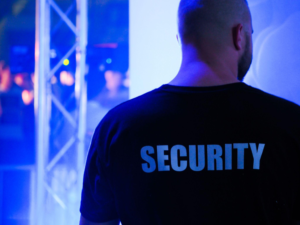
The Two Categories of SIA Licence
Understanding SIA licensing for businesses starts with a distinction that trips up a lot of people: the difference between frontline and non-frontline licences.
- Frontline licencesare for anyone directly carrying out licensable security work: the people actually guarding premises, checking IDs at a door, or monitoring live camera feeds. Frontline licence holders must wear their credit-card-sized SIA licence visibly at all times while carrying out that role, and they can only get one after completing an SIA-approved training course specific to the licence type.
The frontline category covers several distinct specialisms: security guarding, door supervision, public space surveillance (CCTV operation), close protection, cash and valuables in transit, and vehicle immobilisation. - Non-frontline licencesare different in kind, not just in name. They’re for people who manage, supervise, or employ frontline operatives such as directors, managers, or partners, without personally carrying out the licensable activity themselves. A non-frontline licence is issued as a formal letter rather than a card, and critically, it does not require the licence-linked training that frontline roles do.
Someone running a security business needs to hold the right licence for their actual role, and assuming a non-frontline licence covers hands-on security work, or vice versa, is a mistake that carries real legal consequences.
There’s one more wrinkle worth knowing: in-house security staff employed directly by a business are generally exempt from SIA licensing requirements, unless their duties relate to licensed premises where alcohol is served or regulated entertainment takes place.
This exemption is often misunderstood, and it’s part of why third-party contracted guarding, where licensing obligations are unambiguous, tends to be the safer, more auditable choice for businesses that don’t want to navigate that grey area themselves.

Why This Isn’t Just Paperwork
It’s tempting to treat licensing as an administrative detail that sits behind the scenes of a security contract. It isn’t. The Private Security Industry Act 2001 creates specific criminal offences, and they apply to more than just the individual guard standing on site.
Operating as an unlicensed security operative is an offence under section 3 of the Act, and it’s treated seriously: a summary conviction can bring up to six months’ imprisonment, an unlimited fine, or both. Supplying an unlicensed operative, meaning the company employing them, not just the individual doing the work, is a separate offence under section 5, and it’s an either-way offence that can, in the most serious cases, go to trial on indictment with an unlimited fine and up to five years’ imprisonment. Obstructing an SIA investigator or refusing to provide requested information is its own offence too, carrying the same six-month and unlimited-fine exposure.
There’s also a liability angle that many business owners overlook entirely. If a security operative on your premises isn’t properly licensed, and you were aware of it, you can be treated as an accessory to that offence, meaning the legal exposure isn’t limited to the security company you hired; it can reach the business that hired them too.
That single fact is arguably the strongest reason SIA licensing for businesses deserves more attention than it typically gets: the compliance failure of a subcontractor can become your compliance failure the moment you knew, or reasonably should have known, about it.

The Operational Case, Not Just the Legal One
Even setting the legal risk aside entirely, licensed security delivers something an unlicensed arrangement structurally can’t: a verified baseline of training and vetting. Every frontline SIA licence holder has passed a criminal record check and completed a licence-linked qualification specific to their role before they’re allowed to work. That’s not a nice-to-have; it’s the mechanism that filters out people who shouldn’t be trusted with access to premises, cash, or vulnerable members of the public in the first place.
This matters operationally in ways that go beyond ticking a compliance box. A licensed door supervisor has been trained specifically in access control and managing confrontations at entry points, which is exactly the skill set a retail unit or venue trading into the evening actually needs, rather than someone simply standing at the door looking the part.
A licensed security guard has been vetted and trained to a recognised standard for guarding premises and assets, which matters considerably more once you consider how much access a guard typically has to a site during hours when nobody else is around. Businesses that cut corners on licensing to save money on guarding are, in effect, trading a verified standard for an unverified one, on exactly the part of their operation where that verification matters most.
What This Means When You’re Hiring
For a business bringing in security guard services, whether for a single site or an ongoing contract, there are a few practical checks that follow directly from how the licensing system works:
Ask to see the licence, not just take the company’s word for it. Frontline operatives are required to wear their licence visibly while working, which makes this one of the easiest compliance checks available to any business; there’s no excuse for not being able to see it.
Confirm the licence type matches the role. A door supervisor licence, a security guarding licence, and a CCTV licence are not interchangeable, and a business relying on the wrong licence type for the work being done is still exposed even if the individual technically holds some SIA licence.
Check whether the contract is with an SIA-approved contractor. Falsely claiming Approved Contractor Scheme status is itself a specific offence under the Act, which tells you how much weight the SIA places on that distinction; it’s worth confirming rather than assuming.
Understand the in-house exemption before relying on it. If a business is considering employing security staff directly rather than contracting a licensed provider, it needs to be certain those roles genuinely fall outside licensable activity, particularly around any premises serving alcohol or hosting regulated entertainment.
Treat licensing as an ongoing check, not a one-time hire decision. Licences run for three years and require renewal, and licence conditions can be suspended or revoked if something changes: a business relying on a snapshot check at the start of a contract can end up unknowingly non-compliant well into it.
Licensed Coverage Across the UK
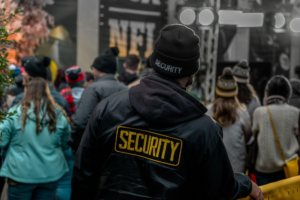
Because licensable activity is defined by statute rather than local practice, the legal requirements around SIA licensing for businesses don’t change from city to city, but the type of licensed cover a business actually needs often does, depending on the premises and the risks involved. Retail security and security guard services in Bristol tend to lean heavily on licensed security guarding for busy shopping districts, while security guards in Coventry are frequently required together for units that trade into the evening.
Retail security in Leeds and Manchester both call for a mix of licensed cover, with security services increasingly paired with event security guards in Leeds for seasonal sales and public events. Manned guarding in Manchester faces similar demands across a mix of department stores, retail parks, and venues needing evening access control.
London remains the most complex licensing environment of all simply due to scale. Security guards in London have to account for an enormous range of premises types, and must combine licensed guarding for sites needing both daytime protection and evening access control.
Security guard services in Leicester and Northamptonshire are seeing the same demand for properly licensed cover as businesses outside the largest cities recognise that the legal exposure around unlicensed security doesn’t shrink just because the premises are smaller.
Licensing sits quietly behind almost every security decision a business makes, and it’s easy to assume it’s been handled simply because a contract has been signed. The reality is that the responsibility doesn’t stop with whoever supplied the guard; it can reach the business that hired them too. A licence check takes a few seconds; a compliance failure discovered during an SIA inspection or a police investigation takes considerably longer to unwind, and by then it’s the business’s name attached to it, not just the guard’s.
Adler Security builds its entire service around removing that uncertainty. Every operative supplied holds the specific frontline SIA licence relevant to their role, be it security guarding, door supervision, or CCTV; they’ve passed the same criminal record checks the SIA requires before any licence is issued, so businesses aren’t left guessing about who’s actually on their premises.
Our services include manned guarding in London, Manchester, Birmingham, Leeds, Sheffield, and Liverpool for premises needing controlled access, and event security guards for markets, sales, and public gatherings. Our security guard services extend further still, with every deployment verifiable on request rather than taken on trust.
If you’re not currently in a position to confirm the licensing status of the people guarding your premises, contact us today and put that question to rest before it becomes a problem someone else asks first.