

Most theft isn’t planned days in advance; it happens in a five-second window where someone clocks an open door, an empty aisle, or a gap in coverage, and decides the risk is worth it. Understanding that split-second calculation is the whole game, because it explains why a guard standing in the right spot does more than any camera bolted to a wall.
A person who could intervene, right there, in real time, reads as a completely different level of risk to someone scanning a room for an opportunity. That’s the mechanism worth unpacking, along with what it actually means for where a guard should be standing.
What the Research Actually Shows
Research shows that visible security measures, including trained guards, can cut theft incidents significantly. Vandalism and petty theft tend to drop when patrols are introduced, with the effect tied specifically to the presence of patrols rather than arrests made afterwards.
Separate research into parking facilities found theft rates dropped sharply wherever attendants were stationed, with poor lighting and no staffing standing out as the two biggest risk factors combined. Crime, in other words, doesn’t disappear because it gets punished more; it disappears because it never looks worth attempting in the first place.
Positioning Is the Whole Point
Visibility only works if it’s placed where decisions actually happen: entrances, till points, loading bays, the transition zones between a public street and a private space. This is why licensed security guards are briefed on foot traffic patterns before a shift even starts, not just handed a radio and told to walk around. Retail security work on the same logic, positioned near the areas where opportunistic theft tends to originate rather than spread evenly across a floor that doesn’t need equal coverage everywhere.
Unpredictability adds another layer. Static presence tells a potential offender exactly what they’re dealing with, but a patrol that moves on a randomised schedule means they can never be fully sure. That’s part of why manned guarding often combines a fixed post with a mobile element, so the coverage never becomes fully predictable to somebody watching from outside.
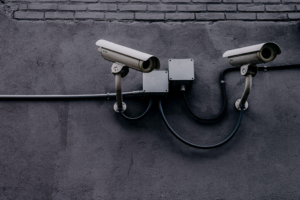
Deterrence isn’t about intimidation; it’s about presence read correctly, in the right place, at the right moment. A guard who understands that distinction prevents more incidents by simply being visible than most response plans prevent after the fact.
Adler Security builds that thinking into every deployment. Our teams are trained not just to respond to incidents but to read a site and position themselves where opportunistic decisions actually get made. Whether it’s retail security, a construction site, or a licensed venue, deployments are built around footfall, entry points, and risk patterns specific to that location, with security guard services in Coventry and available across Leeds, Liverpool, Manchester, Bristol, and Sheffield.
If your current setup relies on cameras alone or a guard standing somewhere convenient rather than somewhere effective, contact us today to talk about a deployment plan built around actual behaviour, not guesswork.