

Could one security measure really protect a business from every threat?
We should not expect it to. A business can face unauthorised entry, theft, vandalism, aggressive behaviour, internal risks and incidents outside normal working hours, often requiring very different responses.
In England and Wales, 28% of business premises experienced at least one crime covered by the Commercial Victimisation Survey during the previous 12 months, with theft, burglary, vandalism and assaults or threats among the leading concerns.
For businesses in Liverpool, a layered security plan can bring different protective measures together rather than relying on one line of defence. Licensed security guards in Liverpool, CCTV monitoring, access management and clear response procedures can each address a different stage of a potential incident.
At Adler Security, we help businesses strengthen their protection by bringing professional security personnel and monitoring solutions together as part of a coordinated approach.
We will look at how these layers can work together, where each one adds value, how businesses can identify weak points and what a practical security structure should look like.
Why One Security Measure Is Rarely Enough
We should begin with a simple principle: no single security measure can cover every situation.
A CCTV system can provide visibility, but it cannot physically challenge someone attempting to enter a restricted area. A security guard can respond to a developing incident, but they cannot watch every corner of a large site simultaneously. An access control system can restrict entry, but it cannot necessarily identify suspicious behaviour once someone is already inside.
Each measure has a different function.
A layered security plan works by placing these functions alongside one another. Instead of asking one system or person to deal with every possible threat, we create several points at which suspicious activity can be identified, discouraged, challenged or reported.
This approach can include:
- Physical security personnel
- CCTV cameras and remote monitoring
- Controlled access points
- Visitor management
- Alarm systems
- Perimeter controls
- Lighting
- Internal security procedures
- Incident reporting
- Emergency response arrangements
The objective is not simply to add more security equipment or more personnel. We need to make sure each layer supports the others.
Start With a Clear Assessment of the Premises
Before building a layered security plan, we should establish what actually needs protecting.
Every commercial property has different risks. A warehouse may be concerned about unauthorised access, stock theft and vehicle movements. A retail property may have to manage shoplifting, aggressive behaviour and public access. An office may be more concerned with restricted areas, confidential information and out-of-hours entry.
We should assess the premises from several angles.
Identify Valuable Assets
We should determine what would cause the greatest disruption or loss if it were stolen, damaged or accessed without permission.
These assets might include:
- Stock and equipment
- Cash
- Vehicles
- Computer systems
- Confidential records
- Machinery
- Customer information
- Restricted work areas
Once we know what matters most, we can decide where stronger protection is required.
Identify Vulnerable Points
We should then examine where an intruder, unauthorised visitor or disruptive individual could gain access.
Potential weak points include:
- Main entrances
- Rear doors
- Loading bays
- Fire exits
- Car parks
- Ground-floor windows
- Service entrances
- Gates
- Staff-only areas
- Storage rooms
The purpose of this assessment is not simply to list doors and windows. We should consider what could happen if someone gained access through each point and how quickly the incident could be detected.

Consider Operating Hours
Security requirements can change dramatically throughout the day.
During business hours, a property may have employees, customers, suppliers, contractors and delivery drivers moving through it. After closing, the same premises may be largely empty.
This creates two different security environments.
During the day, security may focus on access management, observation and appropriate intervention. At night, detection, CCTV monitoring, alarms and rapid escalation can become more important.
A layered security plan should account for both.
Layer One: Physical Security Presence
A visible security presence can provide the first active layer of protection.
We can use security personnel to monitor entrances, observe activity, check credentials, manage visitors and respond when something appears unusual. Their physical presence can also make it clear that security is actively managed rather than left entirely to technology.
For many premises, the position of the guard matters as much as the presence of the guard.
A security professional positioned at an entrance may focus on:
- Checking access permissions
- Managing visitors
- Monitoring deliveries
- Preventing unauthorised entry
- Supporting employees
- Reporting suspicious behaviour
A guard positioned elsewhere may instead monitor a wider site, patrol vulnerable areas or respond to incidents.
This means we should consider what the guard is expected to achieve before deciding where personnel should be stationed.
Security Guards and Technology Should Work Together
We should not treat physical security and technology as competing options.
They can strengthen each other.
For example, a CCTV operator may identify unusual movement around a restricted entrance. That information can then be passed to security personnel who are able to check the area directly.
The process could look like this:
- CCTV identifies unusual activity.
- The activity is assessed against the normal pattern for the site.
- The appropriate security professional is alerted.
- The guard checks the area or person concerned.
- Access is challenged where necessary.
- The incident is recorded.
- Further escalation takes place if required.
- This creates a chain of detection and response.
Security guard services in Liverpool can therefore form part of a wider structure rather than operating separately from CCTV or access control.
The same principle applies to licensed security guards in Liverpool. Their value is not limited to standing at an entrance. They can become part of a planned response system where information from one security layer informs the actions of another.
Layer Two: CCTV Monitoring
CCTV gives us something physical security personnel cannot provide on their own: broad visual coverage.
A well-positioned camera network can monitor multiple areas at once, provide evidence following an incident and help identify unusual activity.
However, we should avoid treating CCTV as a complete security solution.
A camera can record an intruder entering a building, but recording the event is not the same as stopping it. This is why CCTV works best when it is connected to a wider response plan.
Where CCTV Can Add Value
We can use CCTV to monitor:
- Entrances and exits
- Car parks
- Loading areas
- Perimeters
- Corridors
- Reception areas
- Storage spaces
- Restricted zones
- Cash handling areas
Camera positioning should be based on risk rather than simply covering as much space as possible.
A camera that produces a poor view of an entrance may offer less practical value than a correctly positioned camera covering a known access point.
We should also review coverage regularly. Businesses change. Buildings are altered, stock layouts move and new entrances may be created. A camera system that was appropriate several years ago may no longer cover the areas that matter most.

CCTV Monitoring Needs a Response Plan
One of the most common weaknesses in security planning is having technology without a defined response.
We should ask:
What happens when someone is detected?
If the answer is unclear, the security layer is incomplete.
A CCTV alert should connect to a defined procedure. Depending on the situation, that may involve notifying on-site personnel, checking the location, contacting responsible staff or escalating the matter to the relevant emergency service.
We should also distinguish between routine activity and genuine concerns.
For example, movement outside a commercial premises at 7pm may be normal for cleaning staff. The same movement at 2am could require attention.
Context matters.
A strong CCTV monitoring process therefore depends on agreed procedures, clear escalation points and an understanding of normal activity at the premises.
Layer Three: Access Management
Access management gives us another important layer because it controls who can enter particular areas and under what conditions.
Not every person who enters a commercial property needs access to every part of it.
An employee may need access to an office but not a stockroom. A delivery driver may need access to a loading bay but not staff areas. A contractor may require temporary access to a specific room.
We should reflect these differences in the security plan.
Practical access controls can include:
- Staff identification cards
- Keypad entry
- Electronic access systems
- Visitor passes
- Reception checks
- Restricted staff-only doors
- Temporary contractor permissions
- Delivery procedures
- Access logs
The objective is to reduce unnecessary movement throughout the premises.
This also helps us understand who was authorised to be in a particular area if an incident occurs.
Managing Visitors and Contractors
Visitors can create a security gap if we do not have a consistent process.
We should establish clear rules covering:
Who visitors report to
Where visitors wait
How identity is checked
Whether visitors require identification
Which areas they can access
Whether they need an escort
How their departure is recorded
Contractors should be handled in a similar way.
Temporary access should not automatically mean unrestricted access.
By limiting access according to the task being performed, we can reduce opportunities for accidental or deliberate movement into areas where access is unnecessary.
Layer Four: Perimeter Protection
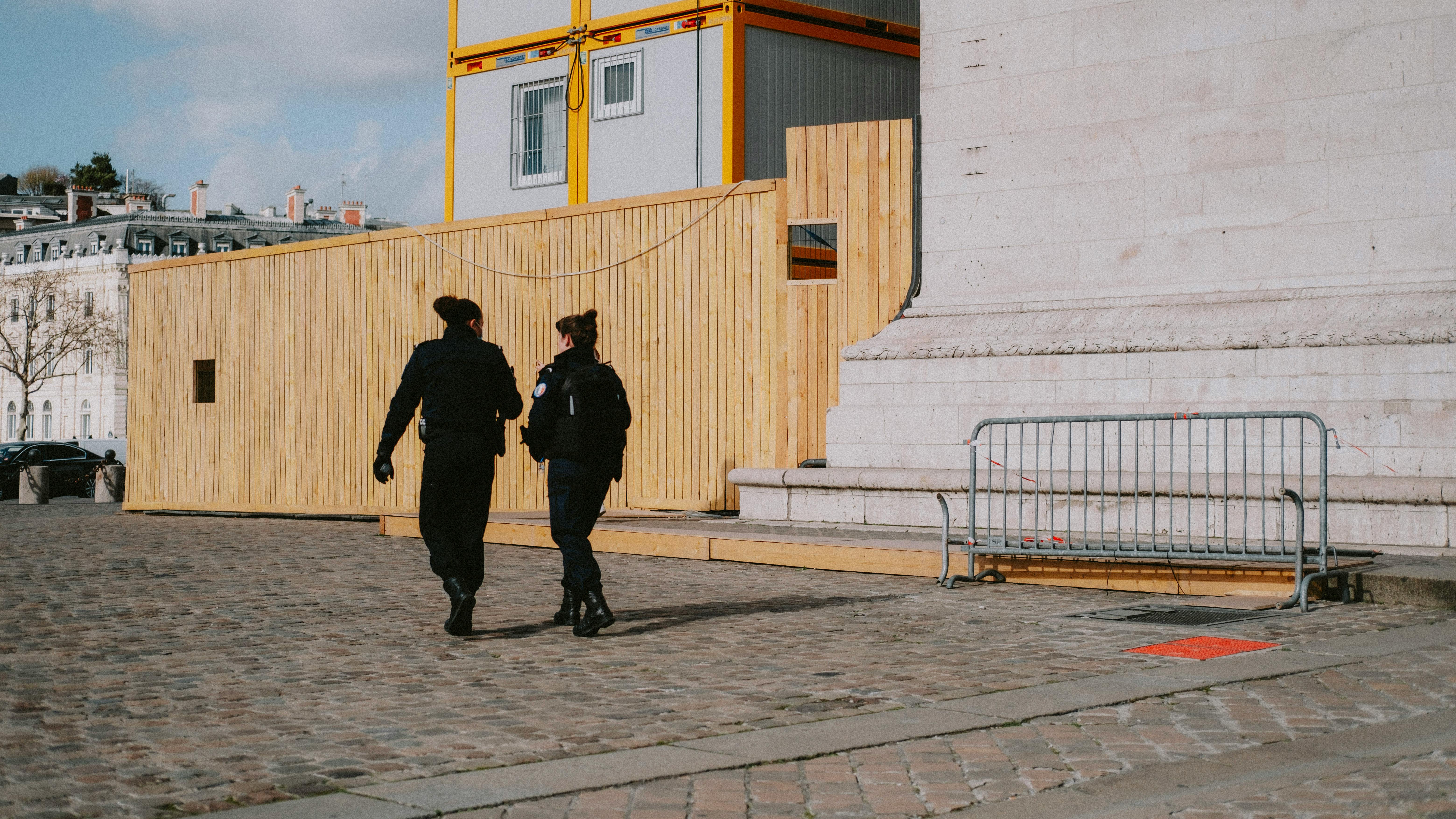
A layered security plan should begin before someone reaches the main entrance.
The perimeter can provide an early opportunity to discourage unwanted access and identify suspicious activity.
Depending on the property, we may use:
- Gates
- Fencing
- Security lighting
- Vehicle barriers
- Controlled entrances
- CCTV coverage
- Patrols
- Warning signage
The aim is to create distance between a potential threat and the most valuable or sensitive areas of the business.
For larger premises, we should pay particular attention to delivery routes, car parks, rear access points and areas that are difficult to see from occupied parts of the building.
Layer Five: Clear Alarm and Escalation Procedures
An alarm is only one part of the response.
We should establish what happens after an alarm activates.
A useful procedure should identify:
- Who receives the alert
- Who assesses the situation
- Who attends the premises
- Who has authority to escalate the incident
- When emergency services should be contacted
- How the event is recorded
- Who reviews the incident afterwards
This prevents confusion during an already stressful situation.
It also gives security personnel a clear framework to follow rather than leaving decisions to chance.
Building Security Around Different Times of Day
We should not assume that the same security arrangement will work equally well throughout a 24-hour period.
A commercial property can have different risk levels depending on its operating schedule.
During Opening Hours
The focus may include:
- Access management
- Visitor control
- Staff and customer safety
- CCTV observation
- Theft prevention
- Incident response
During Closing
The focus can shift towards:
- Securing entrances
- Checking restricted areas
- Confirming staff departures
- Reviewing alarm status
- Monitoring vulnerable points
Overnight
We may place greater emphasis on:
- CCTV monitoring
- Alarm response
- Perimeter checks
- Remote observation
- Security patrols
- Rapid escalation
This flexible approach allows us to match protection to the circumstances rather than applying the same process at every hour.

From Separate Measures to One Connected Defence
How much stronger could our premises become if every security measure had a clear role and every response had a clear next step?
A layered approach gives us a practical way to answer that question. We can assess the property, identify vulnerable areas, control access, improve visibility through CCTV, establish a physical presence where needed and create clear procedures for responding to incidents.
The real value comes from coordination.
Rather than relying entirely on a camera, a guard, an alarm or an access control system, we can bring each element into a single security structure. We can then review that structure as the business changes, ensuring that protection continues to reflect how the premises actually operate.
For businesses that need stronger oversight, better access management and a more organised response to security concerns, speaking with Adler Security can be the next step towards developing a practical layered security plan.